

Brew Stand

Introduction
We need a stand of some sort to hold our kettles and other brewing equipment.
Just about any stand will do, but remember that it must be strong enough to hold hundreds of pounds of liquid.

Our brewing room was originally a cold storage room located under the front steps of the house. It's fairly small at only 5.5 feet wide by 11.5 feet long, with a 7 foot ceiling. Space is at a premium since the room also serves as a wine cellar, so we built our brew stand just large enough to hold all three kettles comfortably. This resulted in a stand that is 64" wide, 34.5" high, and 26" deep. We chose to build a wood stand as it matches the previously built wine rack.
If you're looking for something more industrial, consider a 24 x 60 inch stainless steel commercial work table with a lower shelf. It is the perfect size for our 20 gallon kettles and is what we use now in our newer (larger) brewery.
We want the kettles to be up around arm height when standing up to make adjustments easy.
The pumps work best when placed as far below the kettles as possible so we built a second shelf below. The more vertical distance you can put between the kettle outputs and the pump inputs, the better.
The shelf below also holds the wort chiller and a compact shop vac (used to evacuate water from the various parts after cleaning).
 Completed brew stand
 Kettles and other equipment installed
We built our original stand out of inexpensive softwood lumber that is typically used in construction. It's often called SPF for the three most common white woods used (Spruce, Pine, and Fir) and is available at any lumber yard or home improvement store. Standard North American nominal sizes such as 2x4", 2x6", and 1x4" were used to build a stand that is very strong and stable (a requirement as full 20 gallon kettles are very heavy).
Hex bolts/nuts/washers, lag screws, and regular soft wood screws were used to hold it all together.
The wood was then stained to match the red terracotta tiles found on the floor, walls and ceiling of our brewery.
 New (larger) brewery with stainless steel 24x60" stand for the kettles
Parts and tools
The following parts are needed:
-
(Qty: 5) 8 foot long piece of 2x6" (nominal*) softwood lumber (available at any home improvement store)

-
(Qty: 4) 8 foot long piece of 2x4" (nominal*) softwood lumber (available at any home improvement store)

-
(Qty: 13) 8 foot long piece of 1x4" (nominal*) softwood lumber (available at any home improvement store)

-
(Qty: 24) 3/8-16 x 5" hex bolt

-
(Qty: 24) 3/8"-16 hex nut

-
(Qty: 52) 3/8" flat washer

-
(Qty: 4) 3/8" x 5" hex lag screw

-
(Qty: 8) 2.5" deck screw

-
(Qty: 76) #8 x 1.5" flat head wood screw

-
(Qty: 1) Large cork heat mat

You'll also need the following tools:
-
(Qty: 3-4) Disposable foam brush


*The dimensions given here are standard North American 'Dimensional Lumber' (nominal) sizes. The actual sizes are different from the nominal sizes. For example, a 2x6 has an actual size of 1.5x5.5" (38x140mm), a 2x4 has an actual size of 1.5x3.5" (38x89 mm), and a 1x4 has an actual size of 0.75x3.5" (19x89 mm). For more information refer to the Wikipedia article on 'Lumber'.
Some sellers do not ship outside the USA. If you live outside the USA (like us), we recommend using a forwarding service such as Shipito. We've used them to ship to Canada. The good news is that shipping within the USA is very inexpensive or often free. You then simply pay a small forwarded fee plus the cost of whatever shipping method you choose (USPS, FedEx, etc.). They will even consolidate multiple packages into one to save on shipping. We recommend USPS whenever possible to minimize brokerage fees.
Purchasing through our affiliate links helps support our site at no extra cost to you. We thank you!
STEP 1: Assembly
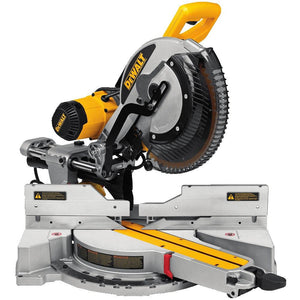
Use a saw (a compound miter saw works well) to cut the 2x6" lumber into five 61" and four 26" pieces. These will be used as the sides and a top center brace.
Cut the 2x4" lumber into eight 34" pieces. These will be screwed together in sets of two to create the 4x4" legs.
Cut the 1x4" lumber into thirty-eight 26" pieces to be used for the shelf tops.
You should end up with the following pieces ready to be bolted & screwed together:
- (Qty: 5) 2x6x61"
- (Qty: 4) 2x6x26"
- (Qty: 8) 2x4x34"
- (Qty: 38) 1x4x26"
 Lumber and parts ready to be turned into a brew stand
 The 3/8-16 hex nuts, 3/8" flat washers, and 3/8-16 x 5" hex bolts used
Two of the 2x4" pieces are first screwed together with two standard 2.5" deck screws to form the 4x4" legs. The 2x6" boards are bolted to the outsides of these legs to form the shelf edges. Use a 6" long 3/8" softwood auger bit to drill holes for the 3/8-16 x 5" hex bolts to pass through and use 3/8" flat washers on both sides. The bolts will be too short by about 1/2” in the eight spots where they pass through the long side of the 2x4's. Widen the nut side of these holes to 1" to a depth of about 1/2" using a 1" drill bit to allow the washer and nut to be countersunk (or use 5.5" bolts). Tighten using a socket wrench.

 Close-up of a top corner showing the 3/8-16x5" hex bolts that hold the sides to the leg
The four 3/8" x 5" lag screws (not hex bolts) are installed into the 2x6" top middle cross beam. A cross beam is not used on the bottom shelf as the weight is not significant.
Use a 6" long 1/4" softwood auger bit to drill pilot holes at least 6" deep first for the lag screws otherwise the wood may split or the screw may snap. Tighten using a socket wrench and remember to use a 3/8" flat washer. From the outside the hex bolts and lag screws look the same in our photos.
Once the frame is completed, install the 1x4" shelf top pieces using #8 x 1.5" flat head wood screws. Use a 7/64" softwood drill bit to drill pilot holes first to avoid splitting the wood.
 Brew stand nearly complete
 Making sure all the equipment fits on the brew stand
STEP 2: Staining
We stained the brew stand to give it a nice finished look that matches the terracotta tiles in the rest of the room. This was a three step process:
- MinWax pre-stain wood conditioner to help provide uniform stain penetration (1 coat).
- MinWax Rosewood stain (1 coat).
- MinWax polyurethane clear semi-gloss for a durable and protected finish (2-3 coats).
Follow the instructions found on the product packaging. We used disposable foam brushes. When applying the multiple coats of the polyurethane, wrap up the brush in a plastic bag so that you can re-use the same brush between coats.
 Staining the brew stand is a three step process using pre-stain conditioner, stain, and polyurethane
 The wine storage was also stained to match the brew stand


To protect the finish we recommend using large cork heat mats (the kind you use under hot cooking pots to avoid burning a table). These are most important under the Boil Kettle as the temperature reaches boiling.
The Mash/Lauter Tun and Hot Liquor Tank generally will not go above about 170F and we have not had any issues using them directly on the wood finish.
If using a stainless steel commercial work tableheat mats are not required. We find that the heat from the kettles does not transfer readily to the table.
Your brew stand is now complete!
Continue on to Building Your Brewery - Hoses.
